
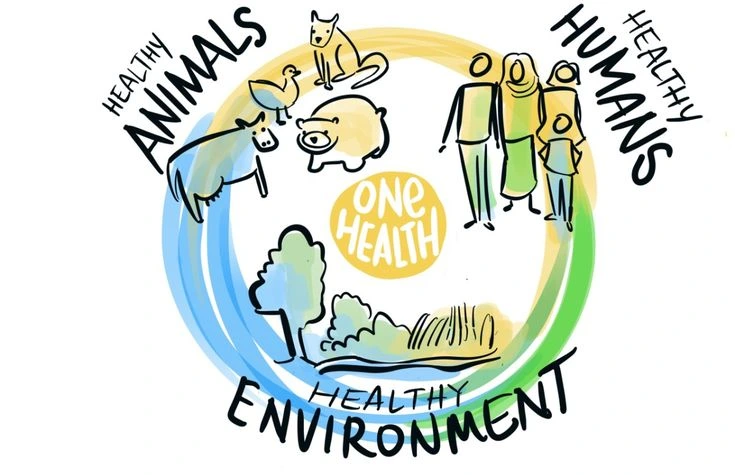
The One Health paradigm is an integrated approach that recognizes the close connection between human health, animal health, environmental well-being, and agriculture. Rather than treating these areas as separate sectors, One Health encourages collaboration among farmers, veterinarians, healthcare professionals, environmental scientists, and policymakers to address health challenges more effectively. Agriculture plays a particularly important role because the way crops and livestock are produced directly influences food safety, animal welfare, environmental quality, and ultimately human health.
Animal Welfare and Human Health
Animal welfare is an important component of the One Health approach because healthy and well-managed animals contribute to safer food systems and sustainable livelihoods. Poor housing, inadequate nutrition, overcrowding, and improper handling can increase stress and disease susceptibility among livestock and other farm animals. Good animal husbandry practices, vaccination, balanced nutrition, hygiene, and responsible veterinary care can improve animal health while reducing the risk of diseases that may spread between animals and humans. Therefore, protecting animal welfare is not only an ethical responsibility but also an important part of maintaining public health and food security.
Agriculture as a Link Between Health Systems
Agriculture connects people, animals, and the environment through food production and natural resource use. Excessive use of pesticides, fertilizers, antibiotics, and other agricultural inputs can create environmental and health concerns when they are poorly managed. Sustainable farming practices such as integrated pest management, responsible input use, soil conservation, biodiversity management, proper waste disposal, and efficient water management can reduce these risks. Similarly, responsible livestock farming can support productivity while improving animal health and reducing unnecessary antimicrobial use. Farmers are therefore central to the One Health framework because their daily decisions influence multiple aspects of the health system.
Building a Healthier and Sustainable Future
Implementing the One Health paradigm requires cooperation rather than isolated action. Farmers, veterinarians, agricultural scientists, doctors, environmental experts, researchers, industries, and communities need to share knowledge and develop coordinated solutions. Education, disease surveillance, food safety systems, responsible antimicrobial use, sustainable agricultural technologies, and strong veterinary and public-health services can help address emerging challenges. Climate change, changing disease patterns, biodiversity loss, and growing food demand further demonstrate why interconnected approaches are necessary. By recognizing the relationship between animal welfare, agriculture, environmental sustainability, and human health, One Health provides a practical framework for creating healthier communities and more resilient food systems. The future of health is therefore closely connected with the way we produce food, care for animals, and manage natural resources.
Read More- https://luxuriousdreamsmagazine.com/category/fitness/

For Advertisment & Article Conatct :+91 7321012159