

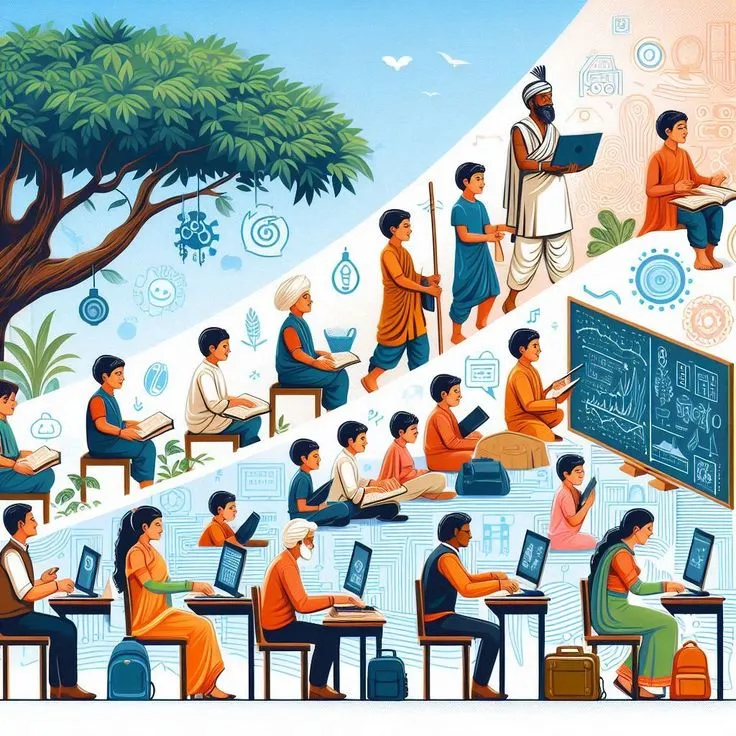
Education in India has undergone a remarkable transformation over the years. From traditional classrooms and textbook-based learning to digital platforms and skill-oriented education, the country is witnessing a significant shift in how knowledge is delivered and received. Today, education is no longer limited to memorising facts or passing examinations. It is gradually becoming a process that encourages creativity, critical thinking, and practical understanding.
1. From Traditional Classrooms to Digital Learning
The introduction of technology has changed the way students learn and teachers teach. Online classes, educational applications, digital libraries, and virtual classrooms have made learning more accessible than ever before. Students living in remote villages can now access educational resources that were once available mainly in urban areas. Initiatives such as Digital India and the National Education Policy 2020 have encouraged the integration of technology into education. However, challenges such as poor internet connectivity, limited digital devices, and unequal access to resources continue to affect many students. Bridging this digital divide remains essential for creating an inclusive education system.
2. A Shift Towards Skills and Practical Knowledge
The modern education system is gradually moving beyond theoretical learning. Students are now encouraged to develop communication skills, problem-solving abilities, creativity, and practical knowledge. The National Education Policy 2020 promotes multidisciplinary education, vocational training, and flexibility in choosing subjects. This approach allows learners to explore different interests instead of following a rigid academic path. Schools and universities are increasingly focusing on internships, research projects, skill development, and experiential learning. Such changes can help students become more confident and prepared for the challenges of the professional world. Education is slowly becoming a bridge between academic knowledge and real-life experiences.
3. Building an Inclusive and Future-Ready Education System
Despite considerable progress, India’s education system still faces challenges related to affordability, infrastructure, teacher availability, and educational inequality. Students from economically weaker backgrounds may struggle to access quality education, while many rural schools require better facilities and learning resources. Addressing these concerns requires consistent efforts from the government, educational institutions, teachers, and communities. Teachers also need continuous training to adapt to changing educational methods and technological advancements. A future-ready education system must provide equal opportunities to every learner, regardless of their financial background or geographical location.
The changing face of education in India reflects the country’s growing aspirations and its commitment to progress. By combining technology, practical learning, and inclusivity, India can create an education system that prepares students not only for examinations but also for life. The true success of education lies in nurturing responsible, independent, and knowledgeable individuals who can contribute meaningfully to society.
Read More- https://luxuriousdreamsmagazine.com/category/exclusive/

For Advertisment & Article Conatct :+91 7321012159