
There was a time when farmers could almost predict the weather by simply looking at the sky. Today, even the most advanced weather apps sometimes struggle to keep up. One season brings drought, the next brings floods, and somewhere in between, crops are left wondering what they did wrong. Climate change has transformed agriculture into a game where the rules keep changing. This is exactly why Climate-Smart Agriculture (CSA) has become more than just another agricultural buzzword—it has become a necessity.
Climate-smart agriculture focuses on producing more food while protecting natural resources, improving farmers’ livelihoods, and reducing the impact of climate change. Instead of fighting nature, it teaches us how to work alongside it. After all, arguing with the weather has never ended well.
Why Traditional Farming Needs an Upgrade
Agriculture has always depended on nature, but changing climate patterns are making farming more unpredictable than ever before. Rising temperatures, irregular rainfall, soil degradation, and increasing pest attacks are reducing productivity across many regions of the world. Farmers who once relied on experience alone are now forced to adapt to conditions they have never faced before.
Climate-smart agriculture encourages farmers to use scientific knowledge alongside traditional farming wisdom. Improved irrigation systems, drought-resistant crop varieties, balanced nutrient management, weather-based advisories, and efficient water conservation techniques help reduce risks while maintaining productivity. Rather than using more resources to solve problems, CSA promotes using resources more efficiently. Saving water, improving soil health, and increasing crop resilience all contribute to sustainable agricultural production while reducing production costs over time.
Technology and Innovation Are Becoming Every Farmer’s New Best Friend
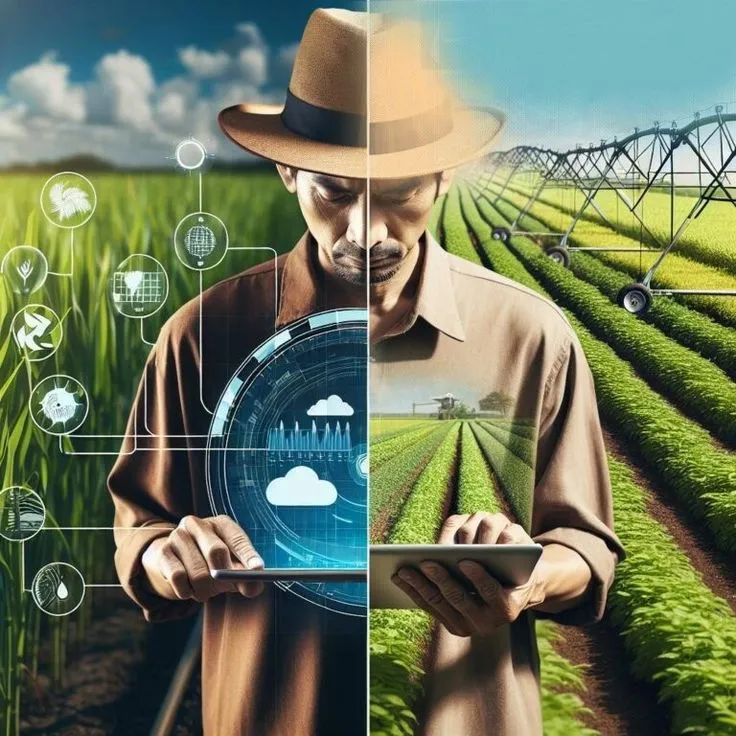
Modern farming is no longer limited to tractors and fertilizers. Climate-smart agriculture embraces technologies that make farming more accurate, efficient, and environmentally responsible. Satellite monitoring, precision farming, artificial intelligence, weather forecasting, drones, and soil sensors allow farmers to make informed decisions based on real-time information rather than guesswork.
Precision agriculture enables farmers to apply fertilizers, pesticides, and water only where they are actually needed. This reduces waste, lowers production costs, and minimizes environmental pollution. Mobile applications now provide weather forecasts, disease alerts, and market prices directly to farmers, helping them respond quickly to changing conditions. While technology cannot stop climate change, it certainly helps farmers stay one step ahead instead of constantly playing catch-up.
Building Resilient Farms for Future Generations
Climate-smart agriculture is not just about increasing today’s harvest—it is about ensuring that future generations can continue farming successfully. Healthy soils, efficient water management, agroforestry, crop diversification, integrated pest management, and conservation agriculture all contribute to long-term agricultural sustainability.
Planting trees alongside crops improves biodiversity, reduces soil erosion, and captures atmospheric carbon. Crop rotation and cover cropping enhance soil fertility while naturally reducing pest populations. Organic matter improves water retention, making crops more resilient during dry spells. These practices not only increase farm productivity but also strengthen ecosystems that support agriculture.
Governments, research institutions, agribusinesses, and farmers all play important roles in promoting climate-smart agriculture through policy support, research, financial assistance, and farmer education. Sustainable agriculture is no longer a choice reserved for environmental enthusiasts—it has become a practical strategy for ensuring global food security in an increasingly unpredictable climate.
Summary
Climate-smart agriculture represents the future of sustainable farming by combining productivity, environmental conservation, and climate resilience. As weather patterns continue to change, farmers must adopt innovative practices that protect natural resources while maintaining profitable crop production. Through efficient resource management, modern technologies, resilient farming systems, and sustainable agricultural practices, climate-smart agriculture offers practical solutions for feeding a growing global population without exhausting the planet’s resources. The future of farming will belong not only to those who grow more but also to those who grow smarter.

For Advertisment & Article Conatct :+91 7321012159