
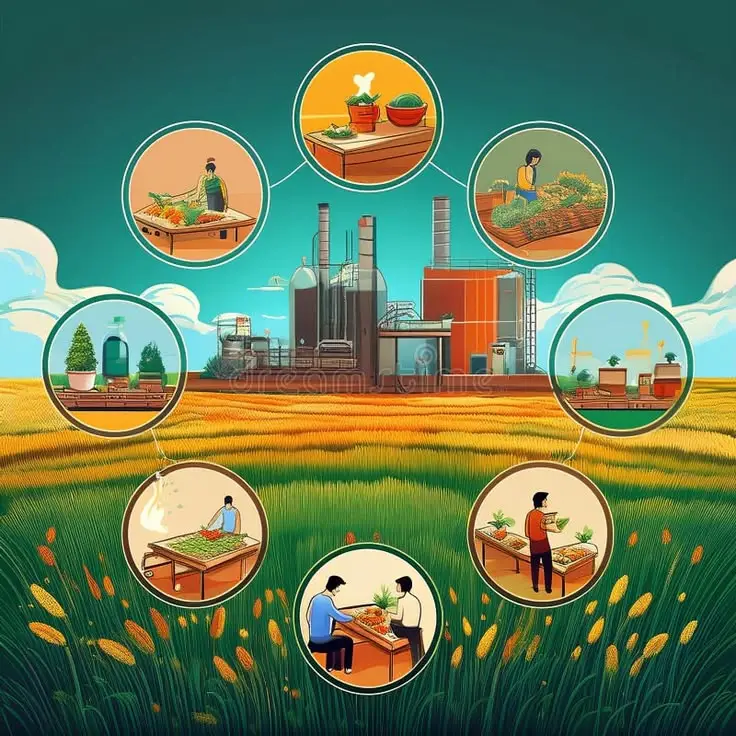
Combating Land Degradation: Sustainable Solutions for Agriculture
Land is one of agriculture’s most valuable resources, yet it is under increasing pressure from unsustainable farming practices, deforestation, overgrazing, and climate change. Land degradation reduces soil fertility, lowers crop productivity, and threatens food security for millions of people worldwide. As the global population continues to grow, protecting and restoring agricultural land has become more important than ever. Sustainable agricultural practices offer practical solutions to combat land degradation while ensuring long-term productivity and environmental health.
Understanding the Causes and Impacts of Land Degradation
Land degradation occurs when the quality of soil and land resources declines due to natural or human-induced factors. Excessive use of chemical fertilizers, improper irrigation, soil erosion, and continuous monocropping are among the leading causes. Degraded land loses its ability to retain water and nutrients, resulting in poor crop growth and reduced yields. In severe cases, fertile farmland can become barren, affecting farmers’ livelihoods and increasing the risk of food shortages.
Sustainable Farming Practices for Soil Conservation
Adopting sustainable farming methods is essential for maintaining soil health. Practices such as crop rotation, cover cropping, conservation tillage, and organic farming help improve soil structure and fertility. Cover crops protect the soil from erosion, while crop rotation reduces nutrient depletion and pest infestations. The use of organic manure and compost enhances soil microbial activity, leading to healthier and more productive agricultural systems.
Restoring Degraded Land Through Innovative Approaches
Land restoration requires a combination of traditional knowledge and modern technologies. Agroforestry, which integrates trees with crops and livestock, helps prevent soil erosion and improves biodiversity. Rainwater harvesting and efficient irrigation systems conserve water and reduce land stress. Additionally, precision agriculture technologies enable farmers to apply inputs more efficiently, minimizing environmental damage while maximizing productivity.
Conclusion
Combating land degradation is essential for achieving sustainable agriculture and ensuring food security for future generations. By adopting soil-friendly farming practices, restoring degraded landscapes, and embracing innovative agricultural technologies, farmers can protect valuable land resources while maintaining profitable production. Sustainable land management is not just an environmental necessity—it is a long-term investment in the future of agriculture and human well-being.

For Advertisment & Article Conatct :+91 7321012159