
Data-Driven Decision Making
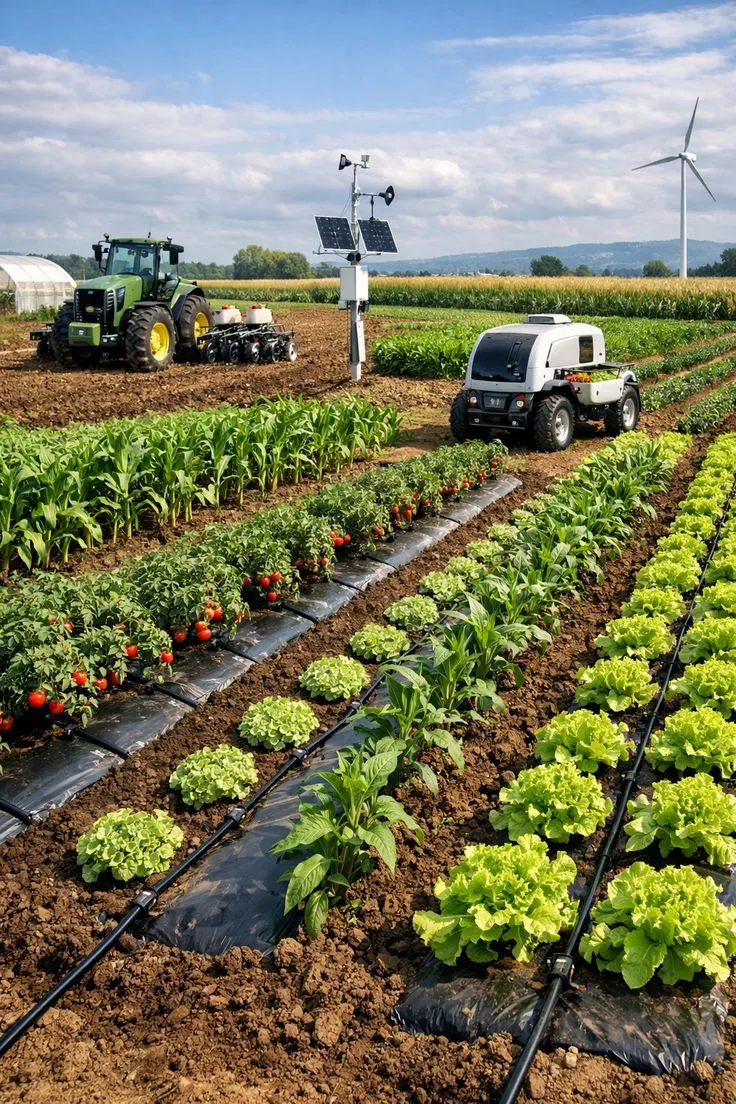
Precision farming is transforming agriculture by shifting from guesswork to data-backed decisions. Farmers today use tools like GPS mapping, soil sensors, and satellite imagery to understand field variability. Instead of applying uniform inputs, they can identify exactly where crops need more nutrients, water, or protection. This targeted approach not only improves crop productivity but also reduces wastage of fertilizers and pesticides. Over time, it helps farmers cut costs and improve soil health, making farming both profitable and sustainable.
2. Smart Irrigation and Resource Management
Water is one of the most critical inputs in agriculture, and precision farming ensures it is used wisely. Techniques like drip irrigation combined with moisture sensors allow farmers to deliver water directly to plant roots based on real-time needs. This prevents over-irrigation and reduces water loss due to evaporation. Similarly, precision nutrient management ensures crops receive the right amount of fertilizers at the right time. Efficient resource use leads to better crop growth, higher yields, and lower environmental impact.
3. Automation and Modern Technologies
The integration of automation and advanced technologies is a key pillar of precision farming. Drones, AI-based monitoring systems, and automated machinery are helping farmers manage large areas with ease. Drones can quickly assess crop health, detect pest attacks, and even assist in spraying. AI tools analyze patterns and provide actionable insights, enabling timely interventions. These innovations not only save labor and time but also enhance accuracy, ultimately boosting productivity.

For Advertisment & Article Conatct :+91 7321012159