

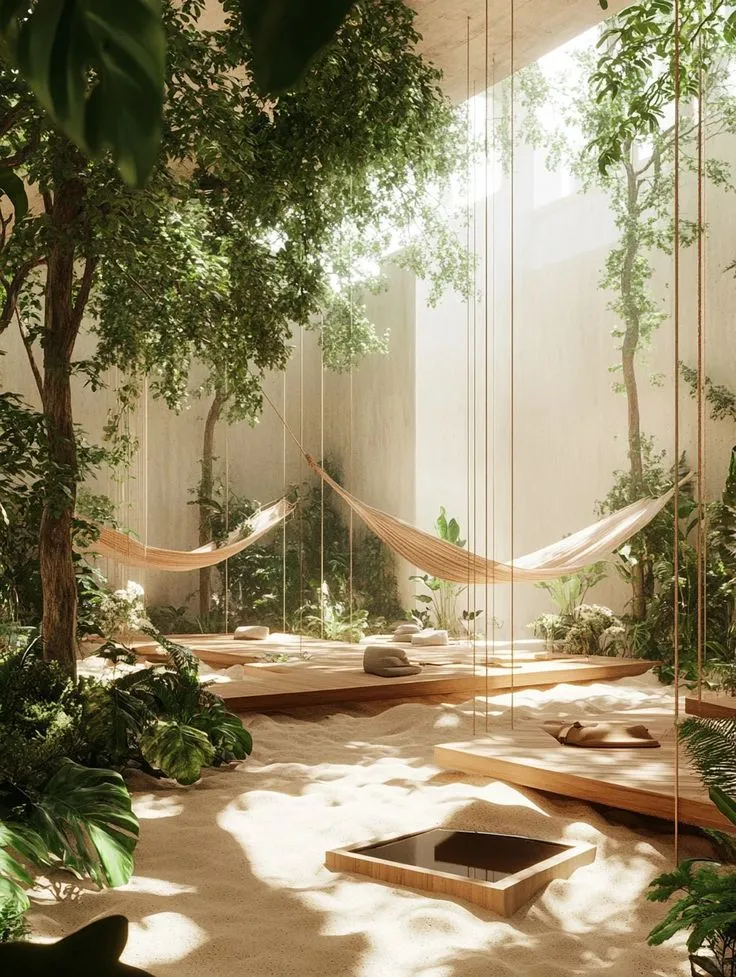
Modern resorts are no longer designed only around luxury, beautiful views, and premium amenities. Increasingly, resort design is becoming connected with mental health, emotional wellness, and the need to escape the pressures of everyday life. Sanctuary spaces are designed to create environments where guests can slow down, disconnect from stress, and reconnect with themselves. By combining thoughtful architecture, natural elements, privacy, and wellness-focused facilities, resorts can transform a simple stay into a restorative experience.
Designing for Calm and Emotional Well-Being
A successful sanctuary space begins with an environment that feels calm rather than overwhelming. Resort designers are increasingly using natural materials, soft lighting, neutral tones, comfortable layouts, and open spaces to create a sense of relaxation. Large windows and carefully positioned outdoor areas can introduce natural light and views of greenery, mountains, water, or gardens. These elements can help create a stronger connection with nature while making the space feel less confined. Quiet corners, private balconies, meditation rooms, reading areas, and secluded seating zones can also give guests opportunities to spend time alone without feeling isolated. The objective is not simply to make a resort look attractive but to create spaces that support psychological comfort.
Bringing Nature and Wellness into Resort Design
Biophilic design has become an important part of wellness-oriented resorts because it integrates natural elements into the built environment. Indoor plants, landscaped courtyards, water features, natural textures, fresh air, and outdoor pathways can create a more soothing atmosphere. Resorts can further support mental well-being by incorporating dedicated wellness areas such as yoga decks, meditation gardens, spa facilities, fitness spaces, and therapeutic outdoor zones. Walking trails and green spaces can encourage guests to spend time outdoors and adopt slower, more mindful routines. When architecture and landscape work together, the resort becomes more than accommodation; it becomes an environment designed around restoration and balance.
Creating Personalized Sanctuary Experiences
Mental wellness is highly personal, so resort design should provide different types of spaces for different needs. Some guests may prefer social wellness areas, while others may seek complete privacy and quiet. Flexible spaces can allow visitors to choose between meditation, exercise, social interaction, creative activities, or simply doing nothing. Acoustic planning is particularly important because excessive noise can disrupt relaxation. Technology can also be integrated thoughtfully through lighting controls, climate settings, wellness applications, and digital-free zones. Ultimately, the future of resort design lies in creating environments where luxury is measured not only by appearance but also by how a space makes people feel. Sanctuary spaces can turn resorts into meaningful destinations for rest, reflection, and mental rejuvenation.
Read More on this- https://luxuriousdreamsmagazine.com/category/fitness/

For Advertisment & Article Conatct :+91 7321012159