
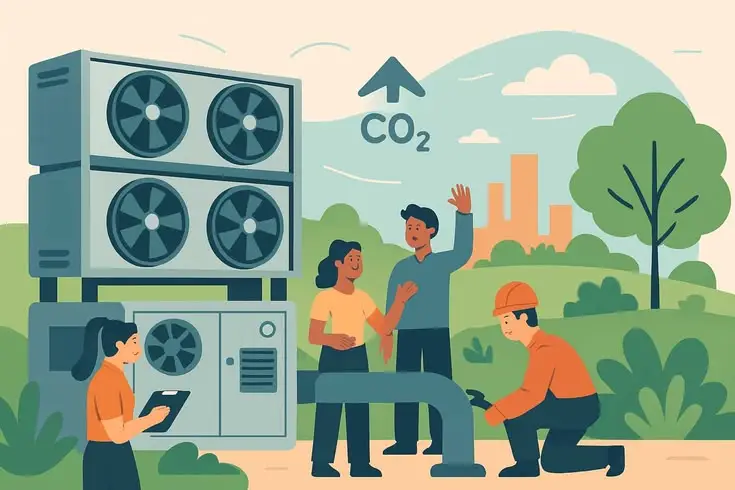
Cooling systems are an essential part of modern estates, particularly in agricultural operations, nurseries, packhouses, storage facilities, offices, and worker accommodation. However, conventional refrigeration and air-conditioning systems can contribute to climate change through both high electricity consumption and refrigerant emissions. Many traditional refrigerants have a high Global Warming Potential (GWP), meaning that leakage can have a significant environmental impact. For a carbon-neutral estate, selecting refrigerants with lower GWP and maintaining cooling equipment properly can therefore become an important part of reducing the overall carbon footprint. Sustainable cooling begins not only with choosing greener equipment but also with preventing unnecessary refrigerant leakage throughout the system’s operating life.
Eco-Cooling Solutions for Sustainable Operations
A carbon-neutral estate can combine several cooling approaches according to its infrastructure and climatic conditions. High-efficiency air-conditioning systems, inverter-based technology, smart thermostats, and variable-speed compressors can reduce electricity consumption while maintaining required temperatures. Where appropriate, natural refrigerants such as ammonia, carbon dioxide, or hydrocarbons can offer lower climate impact compared with many high-GWP alternatives, although their suitability depends on system design, safety requirements, and application. Evaporative cooling can also be useful in suitable dry climates, while passive techniques such as insulation, shading, reflective roofs, natural ventilation, and proper building orientation can reduce the cooling load before mechanical systems are even switched on. In agricultural estates, these measures can be particularly useful for reducing energy demand in nurseries, packhouses, and controlled storage areas.
Building a Practical Green Cooling Strategy
Moving towards eco-cooling does not necessarily mean replacing every cooling system immediately. Estates can begin by conducting an energy and refrigerant audit to identify high-consumption equipment, refrigerant leakage points, inefficient operating practices, and systems approaching the end of their useful life. Regular servicing, leak detection, correct refrigerant charging, cleaning of filters and coils, and timely replacement of damaged components can improve efficiency and extend equipment life. When new equipment is purchased, its energy efficiency, refrigerant type, maintenance requirements, expected lifetime, and end-of-life recovery options should be considered together rather than focusing only on the initial purchase price. Staff training is equally important because incorrect servicing or refrigerant handling can increase emissions.
A carbon-neutral estate is ultimately built through many connected decisions. By combining low-GWP refrigerants, efficient cooling technologies, passive cooling methods, renewable electricity, preventive maintenance, and responsible refrigerant recovery, estates can reduce both operational emissions and long-term environmental impact. Eco-cooling is therefore not simply an equipment upgrade; it is a practical strategy for creating more resource-efficient and climate-conscious agricultural and commercial estates.
Read More- https://luxuriousdreamsmagazine.com/category/agriculture/

For Advertisment & Article Conatct :+91 7321012159