

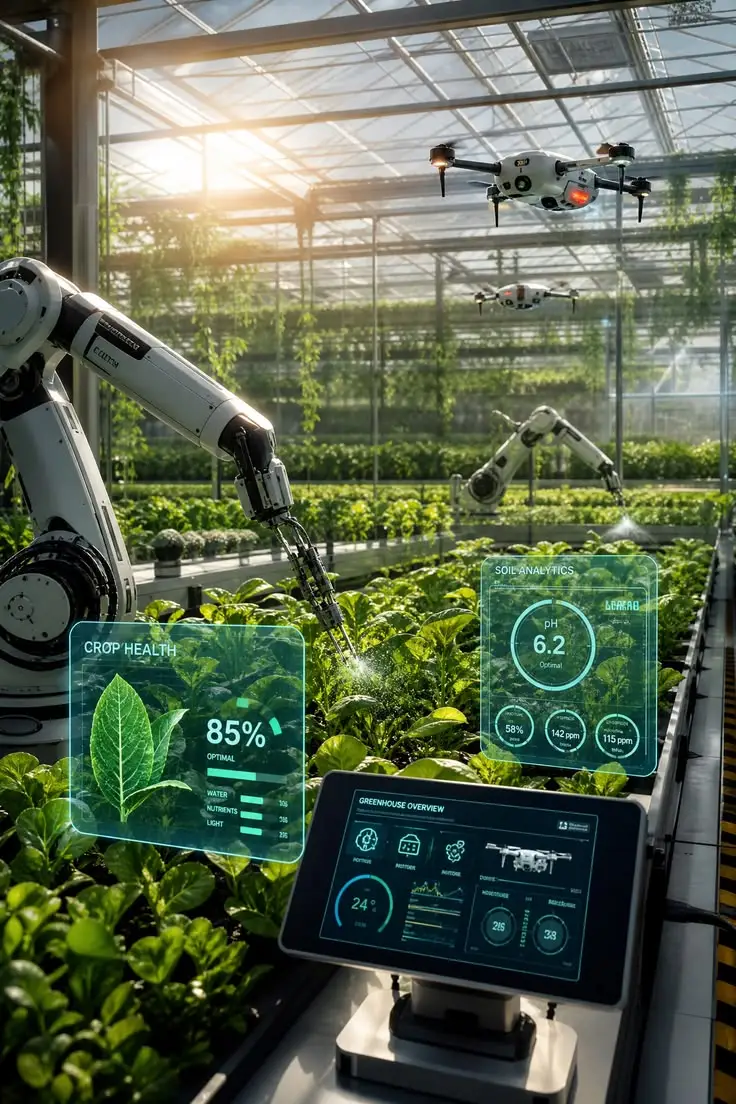
Agriculture has always evolved with time. From traditional ploughs to GPS-guided tractors, every generation has witnessed a transformation in the way food is produced. Today, two innovative technologies—hydroponics and agri-photovoltaics—are redefining what modern farming looks like. One grows crops without soil, while the other allows crops and solar panels to share the same land. Sounds futuristic? It is, but it’s already happening.
With climate change, shrinking agricultural land, water scarcity, and increasing energy demands putting pressure on farmers, these technologies are no longer just exciting experiments—they are practical solutions for a more sustainable future.
Growing More with Less: The Rise of Hydroponics
Hydroponics is a method of cultivating plants without using soil. Instead, crops receive essential nutrients through a carefully balanced water-based solution. While it may sound like something out of a science-fiction movie, hydroponic farming has become increasingly popular across the world, especially in urban areas where agricultural land is limited.
The biggest advantage of hydroponics is its remarkable efficiency. It uses significantly less water than conventional farming because the nutrient solution is continuously recycled. Since crops are grown in controlled environments, they are less exposed to pests, diseases, and unpredictable weather conditions. Farmers can also produce vegetables throughout the year, leading to consistent yields and higher-quality produce.
Leafy greens, herbs, strawberries, tomatoes, and cucumbers are among the most commonly grown hydroponic crops. Although the initial investment in infrastructure and technology can be high, the long-term savings in water, fertilizers, and pesticides often make hydroponics an economically attractive option for commercial growers.
When Solar Panels Become Farming Partners
For years, agriculture and solar power competed for the same piece of land. Agri-photovoltaics, also known as agrivoltaics, changes that equation by allowing both to coexist. In this system, solar panels are installed above or alongside crops, enabling farmers to generate renewable electricity while continuing agricultural production beneath them.
The partial shade created by solar panels can actually benefit certain crops by reducing heat stress and minimizing water evaporation from the soil. This becomes especially valuable in regions experiencing rising temperatures and prolonged dry spells. At the same time, farmers earn an additional source of income by selling electricity generated from the solar panels, reducing their dependence on unpredictable crop markets.
Research across several countries has shown that carefully designed agrivoltaic systems can improve land-use efficiency while supporting both food and energy production. Instead of choosing between farming and renewable energy, farmers gain the advantages of both.
The Future Farm: Where Food, Water, and Energy Work Together
Imagine a farm where vegetables grow hydroponically inside climate-controlled structures powered entirely by solar energy generated through agri-photovoltaic systems. Water is recycled, electricity is renewable, and crops are protected from harsh environmental conditions. This integrated approach represents the future of sustainable agriculture.
As governments encourage renewable energy adoption and precision farming technologies become more affordable, more farmers are expected to explore these innovative systems. Countries facing water shortages, increasing population, and declining arable land stand to benefit the most from such integrated farming models.
Challenges still exist. High installation costs, technical expertise, and access to financing remain barriers for many small farmers. However, continuous technological improvements, supportive government policies, and growing awareness are steadily making these solutions more accessible. What once seemed like an expensive experiment is gradually becoming a practical investment for the next generation of agriculture.
Summary
Hydroponics and agri-photovoltaics are transforming agriculture by making food production smarter, more resource-efficient, and environmentally sustainable. Hydroponics enables farmers to grow crops using minimal water without relying on fertile soil, while agri-photovoltaics combines renewable energy generation with agricultural production on the same land. Together, these technologies address some of the biggest challenges facing modern agriculture, including climate change, water scarcity, and energy costs. As innovation continues to reshape farming, the farms of the future will not only produce more food but will also conserve natural resources and generate clean energy, creating a more resilient and sustainable agricultural system for generations to come.

For Advertisment & Article Conatct :+91 7321012159