
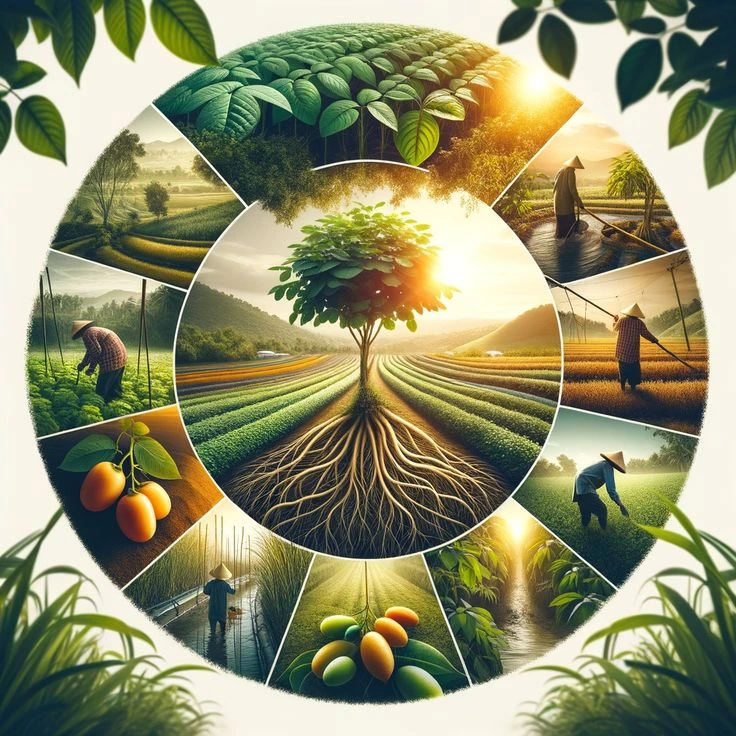
Indigenous agricultural knowledge represents generations of practical experience developed through close interaction with local ecosystems, crops, livestock, and changing climatic conditions. Farmers have traditionally relied on locally available resources, natural indicators, seed selection, mixed cropping, organic inputs, and water conservation techniques to maintain productivity. In modern agribusiness, this knowledge can complement scientific research and technological innovation by providing practical, location-specific solutions. Rather than replacing traditional practices, modern agriculture can document, validate, and improve them through research, allowing valuable knowledge to become part of commercially viable and sustainable farming systems.
Supporting Sustainable and Climate-Resilient Farming
Many indigenous practices naturally support resource conservation and environmental sustainability. Traditional seed preservation helps maintain locally adapted crop varieties, while mixed cropping and crop rotation can contribute to soil health and biodiversity. Farmers in different regions have also developed methods for conserving rainwater, managing soil moisture, preparing botanical formulations, and using farm residues effectively. Integrating such approaches with precision agriculture, soil testing, improved irrigation, and digital advisory platforms can create more resilient production systems. For agribusinesses, this integration can reduce dependence on external inputs, improve resource efficiency, and support farming systems that are better prepared for climate variability.
Creating Value Through Knowledge Preservation
Preserving indigenous knowledge requires more than recording traditional practices; it also requires recognizing the farmers and communities who have maintained this knowledge. Agribusiness companies, research institutions, universities, and farmer organizations can collaborate to document local practices while ensuring that communities receive appropriate recognition and benefits. Digital platforms can help record information about traditional crops, farming methods, local weather indicators, and indigenous resource-management techniques. When scientifically validated and adapted to present-day requirements, these practices can contribute to new products, sustainable farming models, farmer training programs, and rural entrepreneurship. Protecting indigenous agricultural knowledge therefore creates an opportunity to connect heritage with innovation. By combining traditional wisdom with modern science, technology, and responsible business practices, agribusiness can support productivity while preserving agricultural biodiversity and strengthening the knowledge systems that have sustained farming communities for generations.
Read More- https://luxuriousdreamsmagazine.com/category/fitness/

For Advertisment & Article Conatct :+91 7321012159