
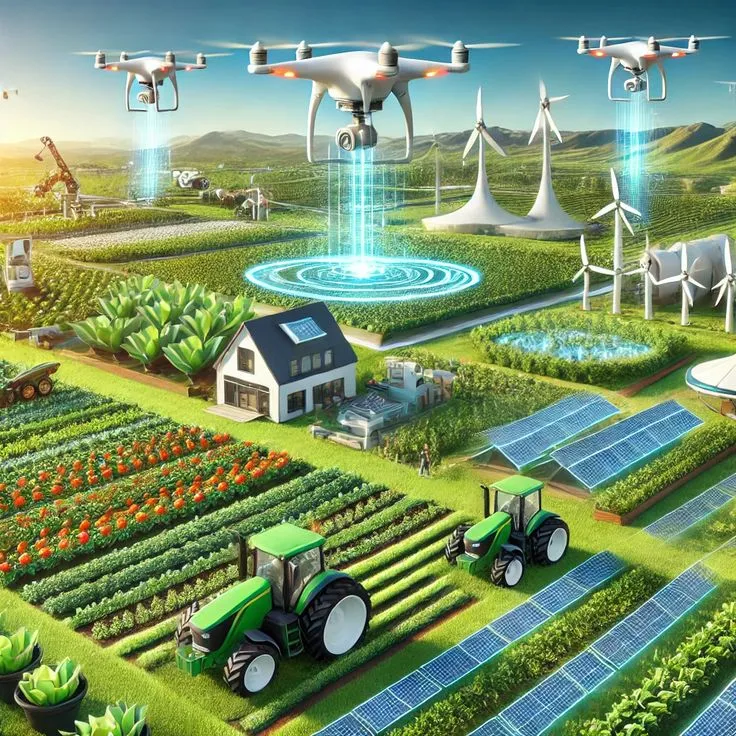
Indian agriculture has never been just an economic activity it is a way of life. For generations, farmers relied on seasonal wisdom, indigenous seeds, and community cooperation to grow food. Today, however, fields are no longer guided only by the monsoon and experience. Satellites, sensors, and smartphones now stand beside the plough. Modern Indian agriculture is becoming a unique fusion where ancestral practices and advanced technology are working together rather than replacing one another.
1. Wisdom of the Past: The Foundation Still Matters
Long before scientific terminology existed, farmers practised crop rotation, mixed cropping, seed preservation, and organic manuring. These methods protected soil fertility and reduced pest outbreaks naturally. Even today, many sustainable farming ideas promoted by scientists such as integrated nutrient management and natural farming closely resemble these traditional systems.
For example, the use of farmyard manure, neem-based pest control, and intercropping of pulses with cereals improves soil health and reduces chemical dependence. Farmers are realising that modern inputs alone cannot sustain productivity. Reviving traditional ecological knowledge is helping agriculture become more resilient against climate change.
2. Smart Farming: Technology Enters the Field
The biggest transformation in modern Indian agriculture is the arrival of smart farming. A farmer now checks weather forecasts on a mobile phone, receives mandi prices through apps, and even diagnoses crop diseases by sending a photo online. Precision agriculture tools, soil testing kits, GPS-based field mapping, and drip irrigation systems are allowing farmers to use water and fertilisers more efficiently.
Drones are being used to spray nutrients and pesticides, saving labour and ensuring uniform application. Remote sensing and satellite data help predict rainfall patterns and crop stress. Artificial intelligence-based advisory services recommend the right crop, sowing date, and fertiliser dose. Instead of guesswork, farming is slowly becoming data-driven.
3. The Future: Sustainable and Youth-Driven Agriculture
Perhaps the most exciting change is the growing interest of young people in agriculture. Start-ups are creating farm-to-market platforms, cold storage networks, and digital marketplaces connecting farmers directly with consumers. This reduces middlemen and increases farmer income.
Climate-smart agriculture is also shaping the future. Solar pumps, protected cultivation, hydroponics, and vertical farming are emerging in peri-urban areas. These innovations reduce water use and make farming possible even on small landholdings.
Modern Indian agriculture, therefore, represents a balance of tradition that provides stability, and technology provides efficiency. The farmer of tomorrow will not abandon heritage but will strengthen it with innovation. In this meeting of wisdom and science lies the promise of a food-secure, sustainable, and prosperous India.

For Advertisment & Article Conatct :+91 7321012159