
Introduction
Agriculture today faces growing uncertainty due to climate change, resource depletion, and increasing food demand. Climate-smart farming has emerged as a practical approach to address these challenges by combining productivity, resilience, and sustainability. It focuses on adapting farming systems to changing environmental conditions while reducing their ecological footprint.
1. Enhancing Resilience to Climate Change
Climate-smart farming prioritizes resilience against extreme weather events such as droughts, floods, and heatwaves. Farmers are encouraged to adopt drought-tolerant crop varieties, diversify cropping systems, and adjust planting schedules based on climate forecasts. Techniques like intercropping and agroforestry help stabilize yields by reducing dependency on a single crop. These practices not only minimize risks but also ensure consistent agricultural output even under unpredictable conditions.
2. Sustainable Resource Management
Efficient use of natural resources is a cornerstone of climate-smart farming. Water-saving methods such as drip irrigation and rainwater harvesting are widely promoted to tackle water scarcity. Soil health is maintained through conservation tillage, organic manure application, and crop rotation. These practices improve soil structure, enhance nutrient availability, and increase carbon sequestration. By optimizing inputs and reducing waste, farmers can lower costs while protecting the environment.
3. Reducing Greenhouse Gas Emissions
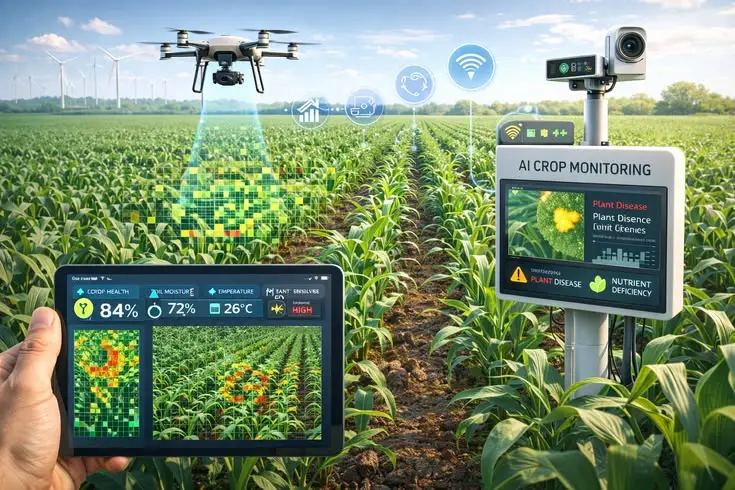
Agriculture contributes significantly to greenhouse gas emissions, but climate-smart farming offers solutions to mitigate this impact. Precision farming technologies help in the judicious use of fertilizers and pesticides, reducing emissions and environmental pollution. Livestock management practices, such as improved feeding strategies and waste management, also play a key role in lowering methane emissions. Additionally, integrating renewable energy sources like solar-powered irrigation systems further reduces dependence on fossil fuels.
Conclusion
Climate-smart farming is not just an option but a necessity for the future of agriculture. By integrating adaptive practices, efficient resource use, and emission reduction strategies, it ensures long-term sustainability and food security. As climate challenges intensify, adopting climate-smart approaches will empower farmers to thrive while safeguarding natural ecosystems for generations to come.

For Advertisment & Article Conatct :+91 7321012159