

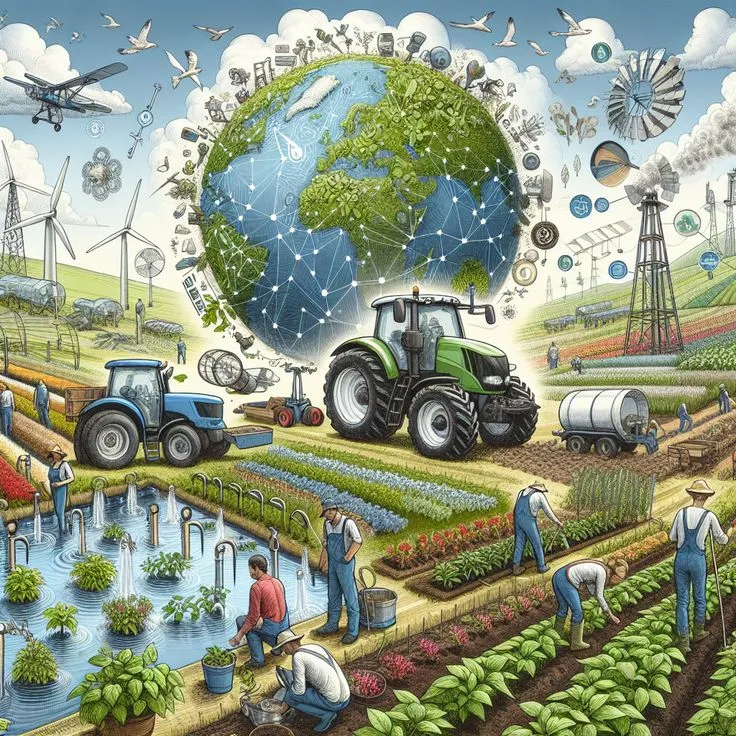
When Farms Stopped Looking Like Nature
Modern agriculture has achieved something remarkable: fields so uniform that even the weeds look unemployed. Endless stretches of a single crop may appear efficient, but beneath that “green carpet” lies a growing problem — declining soil health, pest outbreaks, water scarcity, and reduced resilience to climate change. Nature, unfortunately, never signed up for monoculture.
Biodiversity in farming refers to the variety of plants, animals, microorganisms, and farming practices that coexist within agricultural systems. It includes crop diversity, pollinators, beneficial insects, livestock breeds, soil microbes, agroforestry, and traditional farming knowledge. In simpler terms, biodiversity is what keeps farms alive when chemical shortcuts begin to fail.
Diversity: Agriculture’s Original Insurance Policy
A biodiverse farm is more resilient because different species support one another. Multiple crops reduce the risk of total crop failure, improve nutrient cycling, and naturally suppress pests and diseases. While monoculture says, “Put all your eggs in one basket,” biodiversity quietly replies, “That sounds risky.”
For example, intercropping legumes with cereals improves soil fertility by fixing atmospheric nitrogen. Agroforestry systems provide shade, prevent soil erosion, and support birds and pollinators. Crop rotation breaks pest cycles and reduces dependency on synthetic pesticides. Even earthworms and soil bacteria play crucial roles in maintaining soil structure and nutrient availability.
Pollinators: Tiny Workers, Huge Responsibility
Bees, butterflies, birds, and other pollinators contribute significantly to food production. Yet modern farming practices, excessive pesticide use, and habitat destruction continue to threaten them. Ironically, agriculture depends heavily on pollinators while simultaneously making their survival increasingly difficult. It is somewhat like removing the tires from a tractor and expecting better mileage.
Protecting hedgerows, planting flowering strips, and reducing chemical inputs can help restore pollinator populations and improve crop productivity.
Biodiversity and Climate Resilience
Climate change has made farming more unpredictable, with droughts, floods, and temperature extremes becoming frequent. Biodiverse farms are better equipped to withstand such stresses. Traditional crop varieties, mixed farming systems, and indigenous practices often show greater adaptability than highly uniform commercial systems.
Sustainable agriculture is not merely about producing more food; it is about producing food without exhausting the ecosystems that support life itself.
Conclusion
Biodiversity in farming is not a nostalgic return to the past but a practical solution for the future. Healthy ecosystems create healthy farms, and healthy farms ensure food security, environmental sustainability, and rural livelihoods. The future of agriculture may not depend on how many chemicals we add to the soil, but on how much life we allow to thrive within it.

For Advertisment & Article Conatct :+91 7321012159